Let Them Fail
Why Controlled Failure is One of the Most Powerful Tools a Leader Has.
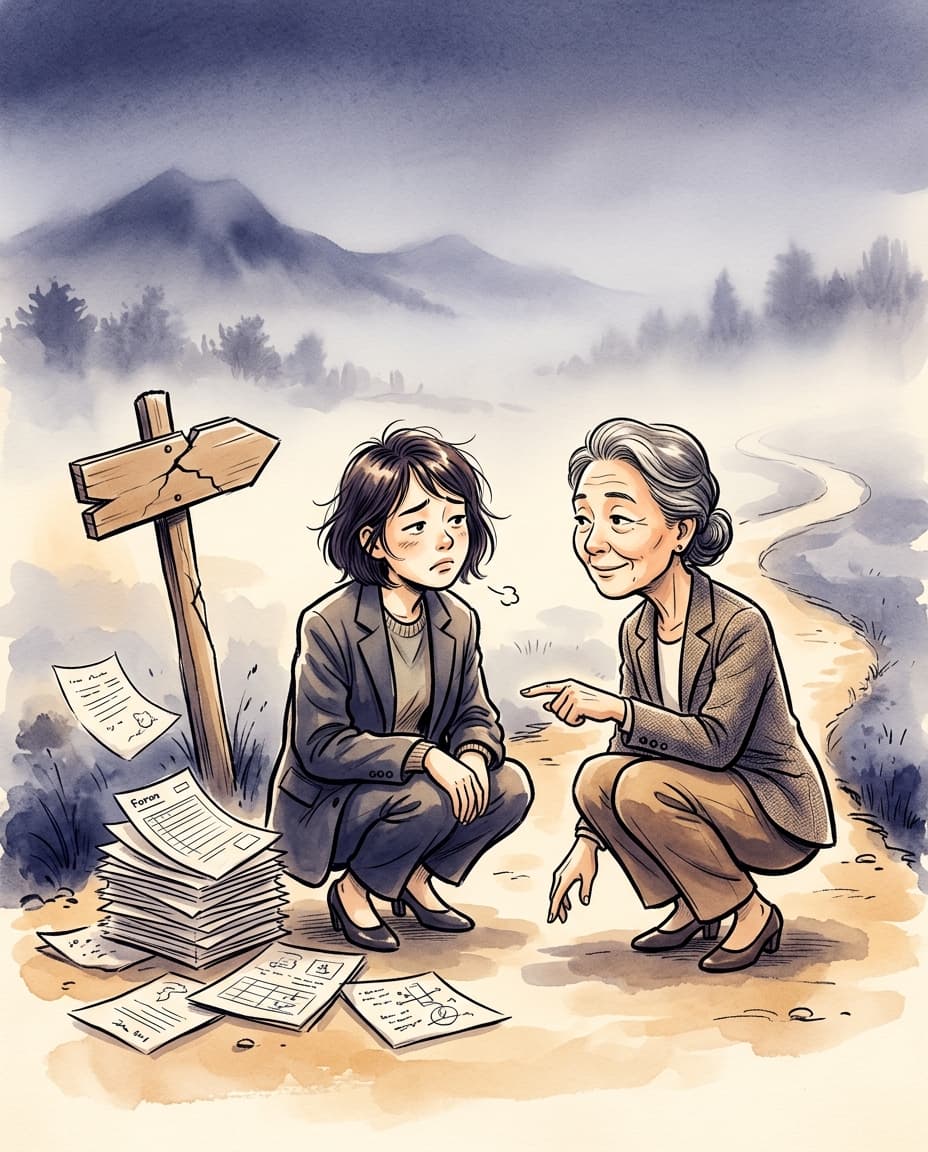
The instinct that holds people back
There is a particular kind of discomfort that comes with watching someone on your team walk into a problem you can already see coming.
Every experienced leader knows it. The moment you recognise the shape of the mistake before it happens. The reflex to step in, redirect, course-correct. To save them the trouble.
It feels like leadership. It looks like care.
But I've come to believe that in many situations, it is neither. It is protection dressed as management, and it quietly robs people of the one experience that no training programme, framework, or mentorship session can replicate: the experience of getting something genuinely wrong and having to understand why.
What failure actually teaches
There are things you can only learn by failing.
Not the theoretical understanding of what failure looks like. Not the awareness that a decision carried risk. The actual, embodied experience of a situation not going the way you expected, the gap between your mental model and reality opening up in real time, and the work of figuring out where the two diverged.
That experience teaches complexity in a way nothing else does.
Complexity does not announce itself. It does not come with a label that says "this situation is more interdependent than it appears" or "the variable you're not tracking is the one that matters." You learn to read those signals by encountering them, missing them, and then going back to find out what you missed.
The leaders, the architects, the delivery managers who handle genuinely complex situations with composure are not necessarily the most technically gifted people in the room. They are the people who have been in enough hard situations to recognise the patterns. And most of them got there by failing in earlier, smaller versions of those situations, with someone close enough to help them make sense of it afterwards.
That last part matters enormously.
The conditions that make failure useful
Not all failure is instructive. Failure without boundaries, without safety, without reflection is just damage.
What I am describing is something more deliberate. Call it controlled and scoped failure.
Controlled means the leader stays close. Not hovering, not interfering, but aware. Present enough to ask good questions afterwards. Present enough to catch something before it becomes irreversible. The person on the team is not abandoned to figure things out alone. They are given genuine ownership of a problem, with a leader who has quietly assessed the blast radius and judged that it is survivable.
Scoped means the consequences are real but bounded. This is not a scenario where customer relationships break down, where a team is left in chaos, where the organisation suffers something it cannot recover from. The stakes are meaningful enough that the person feels the weight of the decision, but not so large that a mistake becomes career-defining for the wrong reasons.
Supported means that when things go sideways, the leader shows up. Not to say "I told you so." Not to immediately fix it and move on. But to sit in the discomfort alongside the person, help them trace what happened, and make sure the lesson lands.
The failure itself is not the point. The reflection is the point. Failure without reflection is just an experience. Failure with good reflection becomes insight. Insight becomes pattern recognition. Pattern recognition is how people learn to manage complexity.
The managers who shaped me
The managers who have had the most lasting influence on how I work were not the ones who made my path easier.
They were the ones who gave me things I was not quite ready for, watched to see how I handled them, and then helped me understand what I had learned once the dust settled.
I can still recall specific moments. Situations where something did not go the way I planned. Where I misjudged the complexity, or underestimated a dependency, or moved too fast on a decision that needed more thought. And in each of those moments, what made the difference was not the rescue. It was what happened after.
A manager who could help me trace the mistake without making me feel like the mistake defined me. Who asked the right questions. Who knew the difference between a person learning and a person struggling, and who responded to each differently.
That kind of support is not soft. It is one of the most technically demanding things a leader can do. It requires you to understand the situation well enough to judge when to intervene and when to stay back. It requires you to tolerate watching someone struggle when every instinct pushes you toward stepping in. And it requires the patience to hold the debrief conversation well, which is harder than it sounds.
Why most leaders don't do this
The pull toward protection is real, and it comes from several places at once.
Some of it is genuine care. You like the people on your team. You do not want to watch them go through something hard if you can prevent it.
Some of it is efficiency. Letting someone work through a problem takes longer than solving it yourself. In a delivery-driven environment, time pressure creates a constant temptation to just handle it.
And some of it, if we're being honest, is about the leader's own comfort. Watching a team member struggle is uncomfortable. Tolerating that discomfort, staying present without fixing, is its own kind of discipline.
But the cost of protection is significant. Teams that are consistently shielded from complexity do not develop the capacity to handle it. They become dependent on the leader to navigate hard situations. And when the leader is not there, or when the situation is larger than anything they've been prepared for, they do not have the tools.
The goal of good leadership is not to be needed indefinitely. It is to develop people to the point where they can handle what you handle, and eventually, more.
Getting the conditions right
Controlled failure is not something you apply carelessly. It requires judgment.
You need to assess the person. Where are they in their development? What have they handled before? What is their default response when things go wrong: do they reflect, or do they deflect? Some people are ready for more than they think. Others need a bit more scaffolding before they can genuinely learn from a setback.
You need to assess the situation. What is the actual downside if this goes wrong? Who else is affected? Is this a situation where failure is recoverable, or is the risk genuinely too high? Not every situation is appropriate for this approach. The art is in selecting the ones that are.
And you need to be honest with yourself about your capacity to hold the space. Can you stay close without interfering? Can you have the debrief conversation well? Are you in a position to support someone through the learning, or are you too stretched right now to do it properly?
If the answer to any of those is not clearly yes, it may not be the right moment.
What this looks like in practice
It does not have to be dramatic.
It can be as simple as assigning someone to lead a stakeholder conversation you would normally own, and sitting in the back of the room. Letting a team member run a planning session with a difficult group, then debriefing afterwards on what worked and what they'd do differently. Giving someone ownership of a delivery problem and resisting the urge to check in every hour.
The scale matters less than the intentionality. You are not stepping back because you are disengaged. You are stepping back because you have made a deliberate judgment that this person, in this situation, is ready to learn something that you cannot teach them any other way.
And when it is over, whatever the outcome, you show up for the conversation.
The question worth sitting with
The best thing I ever learned from a manager was not a technique or a framework. It was the experience of being trusted with something hard, getting it wrong, and being helped to understand what happened without being made to feel small.
That experience shaped how I think about complexity, about risk, about the gap between what you plan and what actually happens. I carry it into every difficult situation I walk into now.
If you are leading people, the question is not whether you trust them. It's whether you trust them enough to let them fail.
Are the people around you growing because of the challenges you are giving them, or in spite of the ones you are taking away?
What is a failure you learned the most from, and who helped you through it?